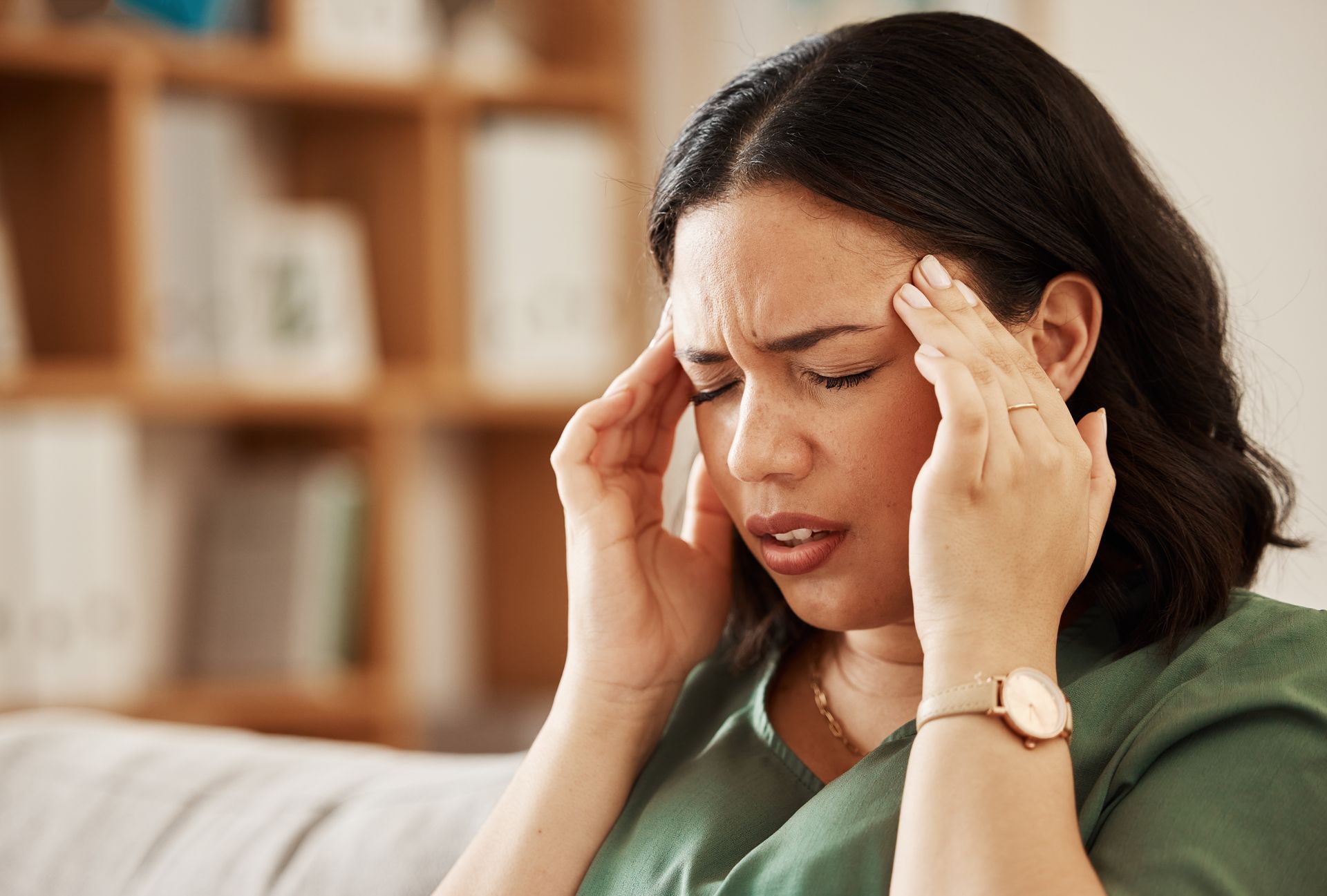

Why Do My POTS Symptoms Flare Around My Period? Hormones and POTS Explained

August 30, 2026

The body content of your post goes here. To edit this text, click on it and delete this default text and start typing your own or paste your own from a different source.If you have noticed your dizziness, fatigue or racing heart getting noticeably worse in the days before your period, you are not imagining it and you are not alone. This is one of the most common patterns I hear about from my female patients with POTS, and there is a real physiological reason behind it.

The Hormone and Nervous System Connection

Oestrogen and progesterone do far more than regulate your menstrual cycle. Both hormones interact directly with your autonomic nervous system, the part of your brain and body that controls heart rate, blood vessel tone and blood pressure without you having to think about it. This is the same system that is already working inefficiently if you have POTS.


Oestrogen tends to support blood vessel flexibility and helps blood vessels constrict and relax appropriately. Progesterone has a more relaxing effect on smooth muscle, including the muscle in your blood vessel walls. Across a typical cycle, the balance between these two hormones shifts several times, and each shift asks your already stressed autonomic system to adapt again.


For a nervous system that is regulating well, these shifts are barely noticeable. For a nervous system already working hard to manage posture and circulation, as I explained in why POTS is more than a heart rate condition, an extra hormonal load can be the tipping point that pushes symptoms from manageable to overwhelming.

Why the Days Before Your Period Feel Worse

In the week or so before your period, often called the luteal phase, progesterone and oestrogen both drop sharply if pregnancy has not occurred. This drop coincides with several patterns I hear about consistently in clinic:


  • Heart rate feeling faster or more erratic than usual
  • Increased dizziness or lightheadedness on standing
  • Worse brain fog and difficulty concentrating
  • Greater fatigue, sometimes described as hitting a wall
  • More noticeable blurry vision or grey outs, similar to what I covered in my article on vision changes when standing
  • Heightened sensitivity to heat, noise or light
  • Headaches or migraine, particularly if you already experience migraines


Blood volume can also shift slightly around this time, and many women retain less fluid in the days leading into their period. Since low blood volume is already a factor that makes orthostatic symptoms worse in POTS, this compounds the effect of the hormonal shift itself.

It Is Not Just in Your Head

I want to be clear about something here. When patients tell me their symptoms are worse around their period, this is a genuine physiological pattern with a mechanism behind it, not a coincidence and not something to dismiss as general premenstrual tiredness.


Research increasingly recognises that hormonal fluctuation is a real modulator of autonomic function, and this matters for how we understand and manage your symptoms across the month rather than treating every flare as a fresh, unexplained event.

The Overlap With Anxiety and Mood

Because hormonal shifts also affect neurotransmitters involved in mood, some women experience increased anxiety or irritability alongside their physical POTS symptoms in the lead up to their period. This can make it hard to tell where the physical symptoms end and the emotional ones begin. I have written more about this distinction in POTS and anxiety, why they are often confused, and the same principle applies here. Racing heart, shakiness and a sense of unease can come directly from autonomic dysregulation, even when anxiety is not the underlying cause.

What You Can Track and What Helps

Understanding your pattern is one of the most useful things you can do, because it lets you plan around your flare rather than being caught off guard by it each month.


Keep a simple symptom and cycle diary

Note your cycle day alongside your energy levels, heart rate symptoms, dizziness and brain fog. Most people start to see a clear pattern within two or three cycles.


Plan demanding tasks around your cycle where you canI

f you know the week before your period tends to hit hardest, scheduling lighter days or more rest during that window can reduce how far you get pushed into a flare.


Prioritise hydration and salt intake, especially premenstrually

Since blood volume tends to dip at the same time hormones shift, staying ahead of your fluid and electrolyte needs matters even more in this window. As always, the right amount depends on your individual health, so this is worth discussing with your GP.


Use your usual POTS strategies more deliberately

Compression garments, staged standing and counter pressure manoeuvres are all worth leaning on more heavily in the days before your period rather than only reaching for them once symptoms have already escalated.


Talk to your GP or gynaecologist about your pattern

For some women, hormonal treatment options can help smooth out the fluctuations that are driving the flare. This is a conversation worth having with your doctor, since it depends on your broader health picture and what has already been tried.

How I Approach This as a Neuro Rehab Chiropractor

When I am working with a patient whose POTS symptoms clearly track with their cycle, it tells me something important about how much reserve capacity their autonomic nervous system currently has. A system with good regulation can absorb a hormonal shift without much disruption. A system that is already working at its limit gets tipped into a flare by the same shift.


This is why my focus is on improving the underlying regulation and coordination of your nervous system, rather than only managing each flare as it happens. In my assessments, I look at how well your vestibular system, autonomic responses and postural reflexes are working together, which sits within my broader approach to POTS and dysautonomia care. As regulation improves over time, many patients tell me their monthly flares become noticeably less severe, even though their cycle itself has not changed.


If you want to understand the fuller picture of how I build a treatment plan for POTS, I go through that in detail in POTS Treatment in Melbourne and Online Australia Wide.

Living in Melbourne With Cyclical POTS Flares

If you are in Melbourne or the bayside area and you have noticed this pattern in yourself, please know that it is a recognised and explainable part of living with POTS, not something you need to push through alone each month. In my Highett clinic, I work with women experiencing exactly this pattern, building a plan that supports your nervous system across the whole month rather than only reacting once symptoms flare.


You do not need a GP referral to book with me, and if you have existing specialist reports or a symptom diary, please bring them along so we can build directly on what you already know about your pattern.


Book your initial assessment here and let's start working out how to support your nervous system through every phase of your cycle.

Research Articles

Fu Q, Levine B D. Autonomic Circulatory Control During Orthostasis and Exercise. Comprehensive Physiology. 2015;5:1673 to 1686.


Peggs K J et al. Gender Differences in Autonomic Function in Postural Tachycardia Syndrome. Physiological Reports. 2012;1:e00033.


Minson C T et al. Influence of the Menstrual Cycle on Sympathetic Activity, Baroreflex Sensitivity, and Vascular Transduction in Young Women. Circulation. 2000;101:862 to 868.


Sheldon R S et al. Heart Rhythm Society Expert Consensus Statement on Postural Tachycardia Syndrome. Heart Rhythm. 2015;12:e41 to e63.


Fu Q et al. Hemodynamic and Neurohormonal Effects of Salt and Water Loading in POTS. Journal of the American College of Cardiology. 2010;55:2858 to 2868.

Tired of being told your tests are "normal"?
Your symptoms are real— even when standard tests don’t explain them.


I’m Dr Tony Briggs, a Neuro Rehab Chiropractor in Highett, Melbourne, with 37 years of clinical experience. I work with people experiencing complex balance and nervous-system-related symptoms, including POTS,  Dysautonomia, Vertigo, Dizziness and nervous-system dysregulation. My Brain First Approach looks beyond the symptoms to understand how the brain, vestibular system and autonomic nervous system may be contributing to the way you feel, move and function.


If you’ve been searching for answers and don’t know where to turn next, let’s take a different look at your nervous system.


[Book Your Initial Neuro Chiro Assessment]


New client offer: First two sessions for $300 · Claimable on private health

No GP referral needed.

Share this article

Recent Posts

POTS
By Anthony Briggs September 2, 2026
Why does your heart race after eating? Learn how POTS can affect heart rate and digestion after meals, common triggers, and how Neuro Chiropractic may support your rehabilitation.
pots symptoms
By Anthony Briggs September 2, 2026
Learn why POTS can cause blurry or changing vision when standing up, how orthostatic symptoms may affect visual function, and when to seek medical advice.
By Anthony Briggs August 31, 2026
Why Can't I Think Clearly? Understanding Brain Fog in POTS and Dysautonomia

By Anthony Briggs February 16, 2026
Understanding Exercise Intolerance in POTS
By Anthony Briggs February 16, 2026
Understanding the Nervous System
By Anthony Briggs February 10, 2026
Understanding What Your Body Is Telling You
By Anthony Briggs February 2, 2026
A POTS Neurological Functional Approach with Dr Tony Briggs
By Anthony Briggs February 16, 2026
POTS After Covid
By Anthony Briggs January 19, 2026
Understanding the Nervous System Difference 
Chiropractor adjusting a patient's back. Red laser lines show spine alignment.
By Anthony Briggs December 25, 2025
Learn how advanced LASER therapy supports pain relief nerve healing balance recovery and faster tissue repair when integrated with chiropractic and neurological care.
Show More