

dysautonomia NEURO REHAB CHIROPRACTOR MELBOURNE
Feel Grounded, Clear & Energised
Improve your balance, energy and ability to handle everyday activities with a personalised Dysautonomia Neuro Rehab treatment plan.




You may be experiencing Dysautonomia if you notice:
✓ Dizziness or light headedness when standing
✓ A racing or irregular heartbeat
✓ Changes in blood pressure
✓ Persistent fatigue or low energy
✓ Brain fog and difficulty thinking clearly
✓ Poor concentration or memory
✓ Difficulty tolerating exercise or physical activity
✓ Changes in body temperature or heat intolerance
✓ Digestive problems
✓ Everyday activities feeling increasingly difficult
If several of these symptoms feel familiar, a neurological assessment can help identify how your nervous system is functioning and where you may need support.

Why you may feel out of balance
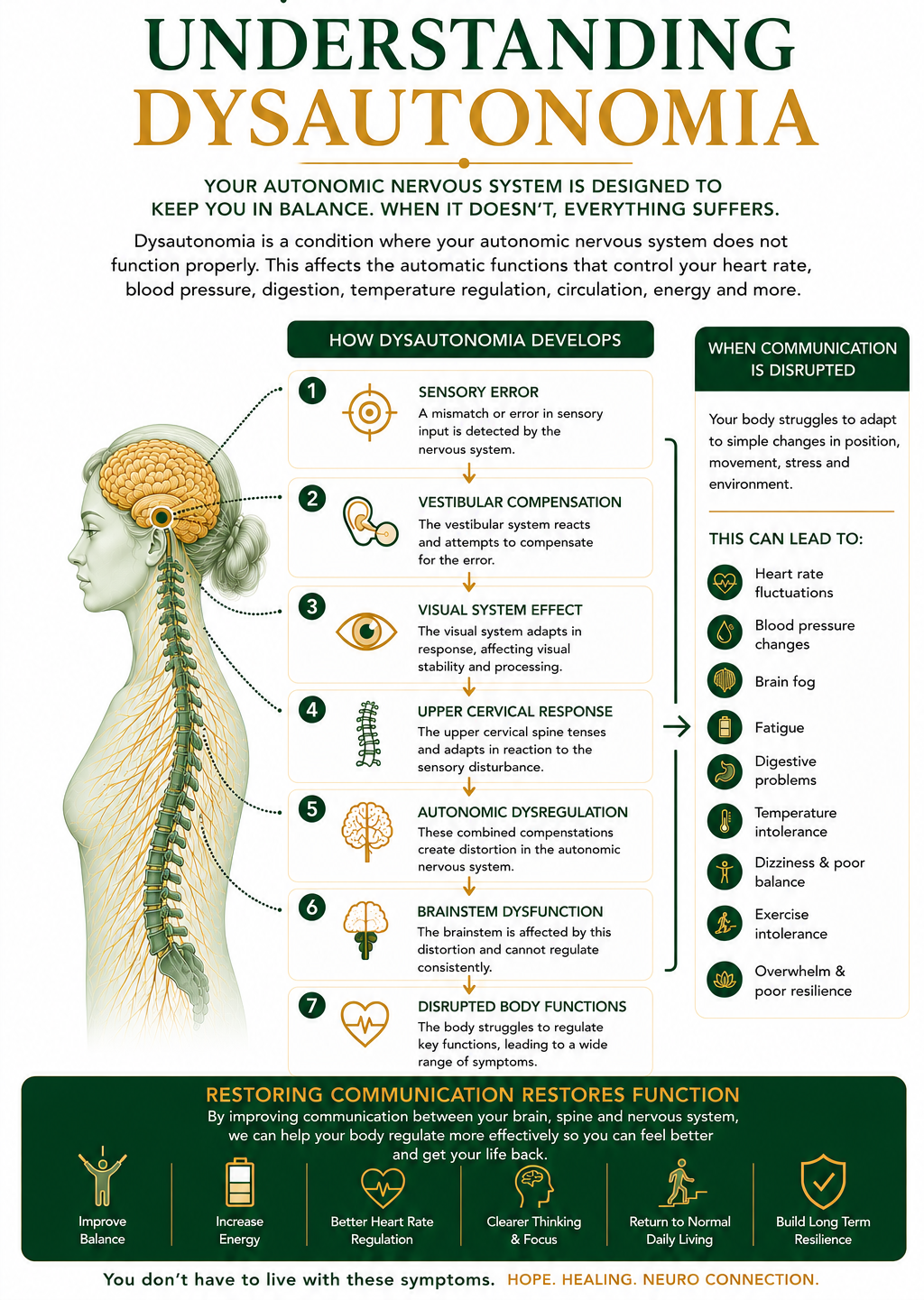
Dysautonomia is an umbrella term for a group of conditions that affect your autonomic nervous system. These include Postural Orthostatic Tachycardia Syndrome (POTS), Neurocardiogenic Syncope, Orthostatic Hypotension, Vasovagal Syncope, Post Viral Dysautonomia and autonomic dysfunction following Concussion or Whiplash.
Although these conditions have different names, they all involve disruption in how your autonomic nervous system functions. This can make it harder for your body to regulate heart rate, blood pressure, circulation, digestion, temperature and energy.
To help you regain balance, I focus on improving communication between your brain and body to support optimal nervous system function, helping you feel more like yourself again.
Why Choose Dr Tony Briggs Neuro Chiro for Dysautonomia Treatment
- 37+ years Clinical Experience
- Holistic Chiropractor
- Functional Neuro Rehabilitation Chiropractor (FNOR)
- Certified Lifestyle Medicine Professional
- Critical Care Nurse
- Member of the Australian Chiropractic Association
To improve Dysautonomia, I look at how your brainstem, upper cervical spine, vestibular and visual systems are communicating and working together. When they dont, thats how nervous system dysfunction can occur.
My Balance Reset Method™ focuses on restoring communication between these key areas to improve nervous system function and help you achieve better balance, more energy, improved circulation and greater day to day function.
Your treatment includes a personalised blend of
Chiropractic, Functional Neurology, Medical Laser, Lifestyle Modification and Personalised Home Exercises to retrain and support your nervous system and optimise recovery.

No guessing. A real assessment. A clear plan.
What to expect from your first Dysautonomia Neuro Chiropractic Appointment
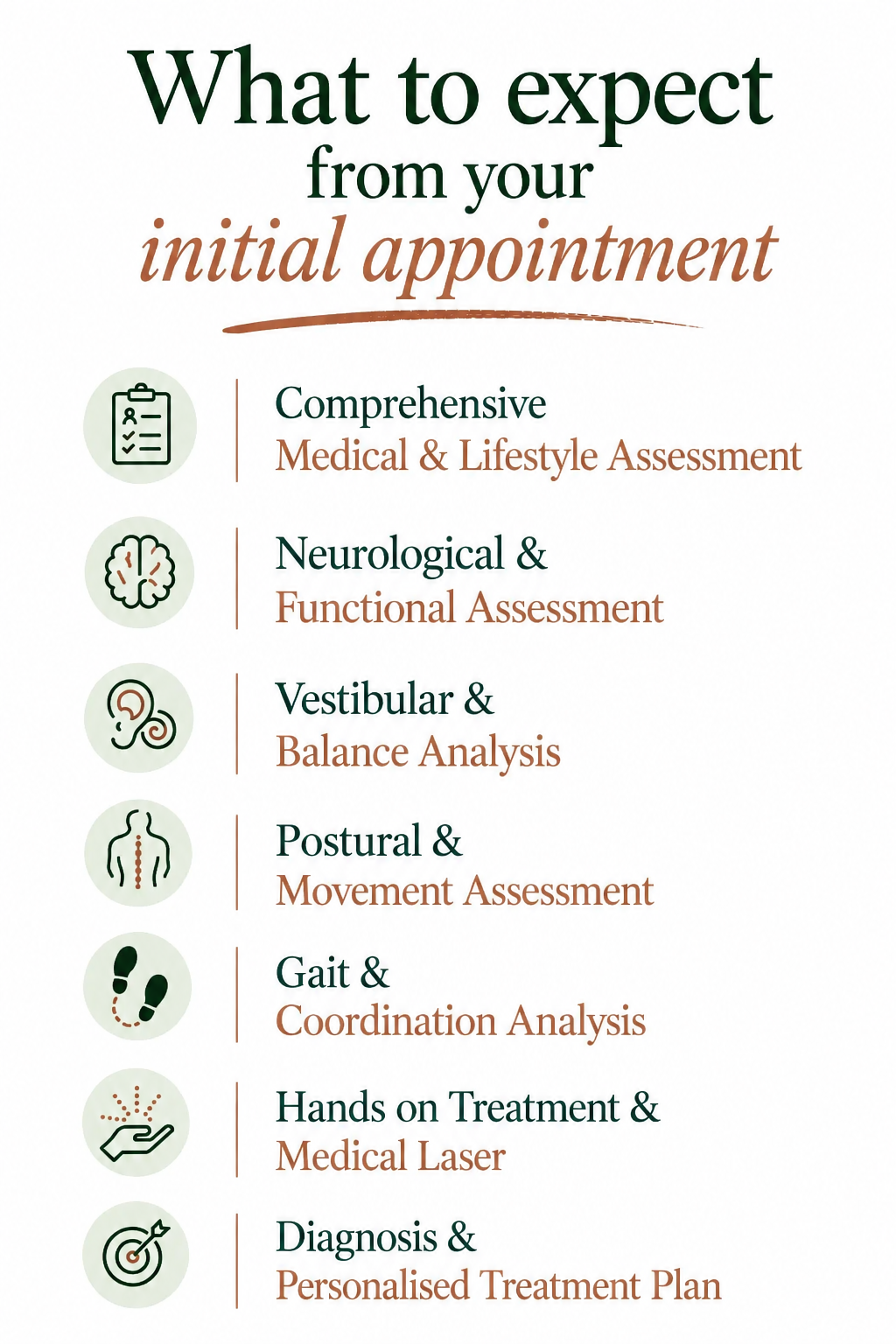
Your first appointment is 60 to 75 minutes, giving me the time to understand your symptoms, health history and how Dysautonomia is affecting your everyday life.
I complete a detailed neurological assessment looking at your balance, eye movements, coordination, posture, movement and autonomic nervous system function to identify where your brain and body are struggling to communicate effectively.
You’ll leave with a clear understanding of what I’ve found, what we’ll work on and your personalised treatment plan, including your next steps and what to expect from treatment.
I recommend allowing 6 to 8 sessions to start seeing meaningful results, giving your nervous system the consistency it needs to respond, adapt and change.
Clear, practical and realistic is how I work
No guessing. A real assessment. A clear plan.
Benefits using Neuro Chiropractic and my Balance Reset Method for Dysautonomia
✓ More consistent energy throughout the day
✓ Clearer thinking and better concentration
✓ Greater tolerance for movement and activity
✓ Better temperature tolerance
✓ Improved digestion
✓ Better sleep and recovery
✓ Greater resilience during everyday stress
✓ More confidence in your body
✓ Greater capacity for work, exercise and social activities
✓ More freedom to do the things you enjoy
✓ Feel more like yourself again

Heal Faster & Recover Better with
Medical LASER Therapy
Medical LASER Therapy
may be used alongside Neurological Chiropractic Care to support tissue health, circulation, inflammation reduction and nervous system recovery. This can be particularly supportive for people with Dysautonomoa who experience pain, fatigue or slow recovery from activity.
Dysautonomia Symptoms
- Dizziness and light headedness, particularly on standing, with sudden movement or after prolonged sitting
- A rapid or irregular heartbeat, especially on standing
- Blood pressure fluctuations
- Persistent fatigue and post exertional exhaustion
- Brain fog, poor concentration and memory lapses
- Difficulty regulating body temperature, feeling excessively hot, cold or sweating inappropriately
- Digestive disturbances including nausea, bloating, early fullness and unpredictable bowel function
- Shortness of breath
- Anxiety and difficulty regulating stress
- Difficulty falling or staying asleep and waking unrefreshed
- Symptoms that worsen with stress, illness, heat, exertion and hormonal changes
Dysautonomia Causes
- Head or neck injury, including concussion and whiplash, disrupting brainstem and autonomic pathways
- Post viral illness including, COVID-19, triggering autonomic nervous system dysfunction that persists beyond the acute illness
- Upper cervical spine dysfunction disrupting neurological input to the brainstem and undermining autonomic regulation
- Brainstem dysfunction reducing the accuracy of autonomic signalling throughout the body
- Vestibular system dysfunction contributing to postural instability and blood pressure dysregulation
- Chronic nervous system overload from sustained stress, illness or sensory overload
- Genetic predisposition including hereditary forms of dysautonomia such as POTS and familial dysautonomia
Dysautonomia Common Questions
What conditions fall under Dysautonomia?
Dysautonomia is an umbrella term covering a range of conditions involving autonomic nervous system dysfunction. Those seen and supported at this practice include:
- POTS — Postural Orthostatic Tachycardia Syndrome
- Neurocardiogenic syncope (fainting driven by nervous system dysregulation)
- Orthostatic hypotension (blood pressure drops on standing)
- Autonomic dysfunction following concussion or whiplash
- Post-viral or post-illness autonomic dysregulation
- Chronic fatigue related autonomic imbalance
- Many patients arrive with a partial diagnosis or no diagnosis at all — having been told their tests are normal despite debilitating symptoms. A Functional Neurology assessment can identify autonomic dysregulation that standard testing does not capture.
Why do my test results come back normal when I feel so unwell?
This is one of the most distressing aspects of Dysautonomia for patients. Standard medical tests — blood work, ECGs, MRI scans — are designed to identify structural or biochemical pathology. They are not designed to assess how efficiently the brain and nervous system are regulating autonomic function in real time.
A Functional Neurology assessment evaluates the nervous system differently, looking at how the brainstem, vestibular system, visual pathways, upper cervical spine, and autonomic regulation are all functioning and communicating together. This reveals dysregulation that standard tests do not capture, and provides a clear picture of what is actually driving symptoms.
Can Chiropractic care help with Dysautonomia?
A Brain First Chiropractic Approach™ addresses the root cause. Care focuses on improving how the brain and nervous system regulate posture, balance, circulation and sensory input, which can support symptom stability and functional improvement.
How does a Neuro Rehabilitation Chiropractor approach Dysautonomia?
The Brain First Approach™ starts with a thorough Functional Neurology assessment covering brainstem integration, vestibular pathways, upper cervical spine mechanics, visual system function, and autonomic regulation — all evaluated together to identify where the dysregulation is originating.
Treatment then addresses those findings directly through:
- Brain-based Chiropractic care — restoring accurate mechanical and neurological input from the upper cervical spine to the brainstem
- Functional Neurology Rehabilitation — retraining brainstem integration, sensory processing, and autonomic regulation pathways
- Balance and sensory integration input — improving how the nervous system processes and responds to positional and movement information
- Nervous system regulation strategies — gentle, graded input designed to build regulatory capacity without triggering flare-ups
- Lifestyle medicine strategies — supporting autonomic stability through evidence-based lifestyle guidance
- Medical Laser Therapy — reducing inflammation and supporting neurological tissue recovery
- All care is adapted to your tolerance.
Dysautonomia does not require forcing the body to cope — it requires restoring regulation from within the nervous system.
When should I consider seeing a Chiropractor for Dysautonomia?
Consider a Functional Neurology assessment if your symptoms are persistent, fluctuate, or worsen with stress, illness, or physical exertion. Particularly if you experience:
- Dizziness or light-headedness, palpitations, or blood pressure changes
- Ongoing fatigue, post-exertional exhaustion, brain fog, or poor concentration
- Temperature intolerance, digestive disturbances, or shortness of breath
- Anxiety, feeling unsettled, or difficulty regulating stress responses
- Symptoms that began or worsened after a head or neck injury or viral illness
No GP referral is required. If you have an existing diagnosis from a specialist, that information is welcomed and factored into the assessment.
Why hasn't my Dysautonomia improved with other treatments?
Most standard dysautonomia management focuses on symptom control — medication to manage heart rate or blood pressure, compression garments, increased fluid and salt intake. These can provide partial relief but they do not address why the autonomic nervous system is dysregulating in the first place.
If the neurological drivers — disrupted brainstem input, vestibular dysfunction, poor upper cervical spine mechanics, inefficient sensory integration — are never identified and treated, the underlying dysregulation continues regardless of how well symptoms are managed day to day.
Addressing the cause rather than compensating for it is what produces genuine and sustainable improvement.
Why do my symptoms fluctuate so much from day to day?
Fluctuating symptoms are a hallmark of dysautonomia and reflect the nervous system's inconsistent ability to regulate. On days when additional demands are placed on the system — stress, illness, poor sleep, heat, physical exertion — the autonomic nervous system cannot compensate adequately, and symptoms worsen.
On better days, the system is just managing to cope. This variability is not imagined and it is not random — it directly reflects the state of autonomic regulation. Improving how the brain and nervous system regulate is what reduces both the frequency and severity of these fluctuations over time.
Can this help with post-viral Dysautonomia or long COVID?
Yes. Post-viral autonomic dysregulation, including that associated with long COVID, is one of the presentations seen at this practice. Viral illness can trigger or worsen autonomic nervous system dysfunction, leaving patients with persistent fatigue, brain fog, heart rate instability, dizziness, and post-exertional exhaustion long after the acute illness has resolved.
The Brain First Approach™ assesses where the neurological dysregulation is occurring and supports recovery by restoring regulation within the nervous system, addressing the underlying neurological disruption rather than managing individual symptoms in isolation.
Is this chiropractic approach suitable if I feel easily overwhelmed or fatigued?
Yes. Care is carefully paced and adapted to individual tolerance. Sessions are designed to support regulation without pushing the system into overload or symptom flares.
Do I need to stop exercising or weight training if I have Dysautonomia?
No, but it is strongly advised to moderate your activities depending upon your individual experience. Care does not require stopping exercise unless medically indicated. The focus is on improving nervous system regulation so tolerance to movement, posture and activity can gradually improve.
How long does it take for Dysautonomia to improve?
When we start using the Brain First Approach, your brain changes within seconds. The duration of these changes varies between individuals. Some people notice early changes in stability, clarity or tolerance, while others experience more gradual improvements as nervous system regulation and capacity build over time. You will receive specific and graduated take home movement patterns that will help you create positive change faster.
Is Chiropractic care safe for someone with Dysautonomia?
Yes. All care at this practice is carefully calibrated to your tolerance and adapted at every session based on how your nervous system is responding.
The goal is to introduce novel input that recalibrates your senses and builds regulatory capacity gradually and safely, without overwhelming a system that is already under stress. Avoiding symptom flare-ups is a core principle of the approach.
Can this treatment support chronic fatigue alongside Dysautonomia?
Yes. Chronic Fatigue Syndrome commonly overlaps with dysautonomia and balance disorders. A Brain First Approach™ is designed to support nervous system regulation across these interconnected conditions.
Do I need a formal Dysautonomia diagnosis to start care?
No. Care may be appropriate for people with a formal diagnosis or those experiencing symptoms consistent with autonomic nervous system dysregulation.
Can I claim back on private health?
Yes, chiropractic care is covered by most extras policies including Medibank, BUPA, HCF, NIB and AHM. I process health fund claims on the spot. Rebate amounts vary by policy — worth checking with your fund before booking.
Dysuatonomia Neuro Rehab Chiropractic Clinic in Highett, Melbourne
Clinic Hours
Tuesday: 8 AM - 7 PM
Friday: 8 AM - 7 PM
Saturday: 9 AM - 1 PM
5 Beaumaris Parade, Highett, VIC, AUS
Free parking on site
Easy to reach from Brighton, Sandringham, Cheltenham, Mentone, Hampton and Moorabbin.
Book your comprehensive functional neurology assessment today and find out whether your brain and nervous system are behind your symptoms.