
Concussion NEURO REHAB CHIROPRACTOR MELBOURNE
Clear Your Head, Regain Your Balance & Get Back to Life
Improve dizziness, visual function, concentration and movement with a personalised Concussion Neuro Rehab treatment plan.



Still struggling after a concussion?
You may benefit from Concussion Neuro Rehab if you are experiencing:
✓ Headaches or pressure in your head
✓ Dizziness or problems with balance
✓ Brain fog or difficulty thinking clearly
✓ Poor concentration or memory
✓ Blurred vision or difficulty focusing your eyes
✓ Sensitivity to light, noise or busy environments
✓ Fatigue or reduced tolerance for activity
✓ Neck pain or stiffness
✓ Feeling overwhelmed by screens, driving or movement
✓ Difficulty returning to work, study, exercise or sport
If these symptoms are affecting your everyday life, a neurological assessment can help identify which systems have been affected and where to focus your Concussion Neuro Rehab.
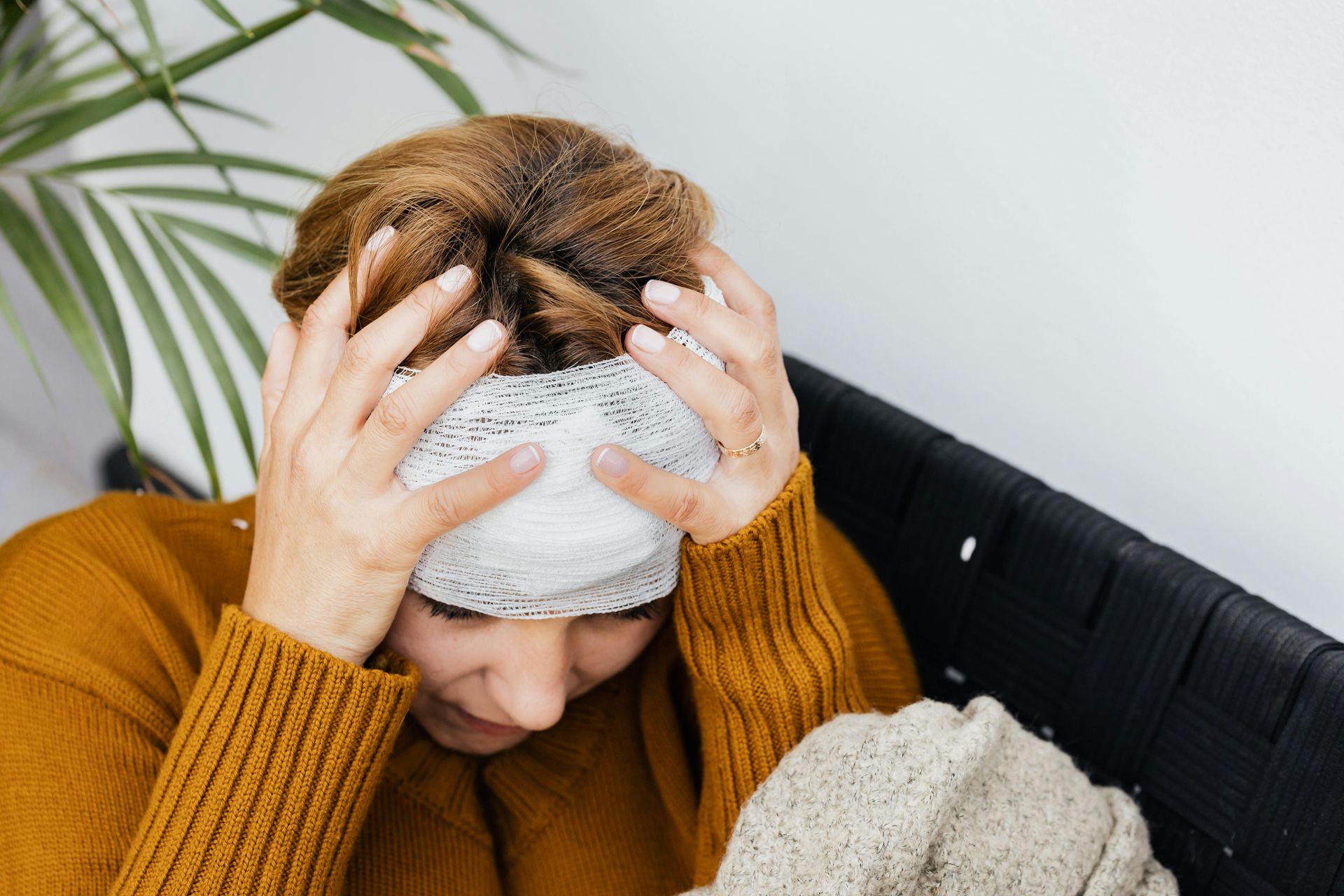
Why your concussion symptoms persist
Persistent concussion symptoms can occur when areas involved in balance, vision, movement and sensory processing have yet to fully recover.
• Vestibular dysfunction affecting balance and movement
• Visual processing changes causing problems with focusing, tracking or screens
• Upper cervical dysfunction contributing to headaches, dizziness and neck symptoms
• Neurological pathways that need targeted rehabilitation
• Reduced tolerance to physical or cognitive activity
• Multiple concussions creating a more complex recovery
• Ongoing symptoms despite normal standard imaging
• Limited or incomplete Concussion Neuro Rehabilitation

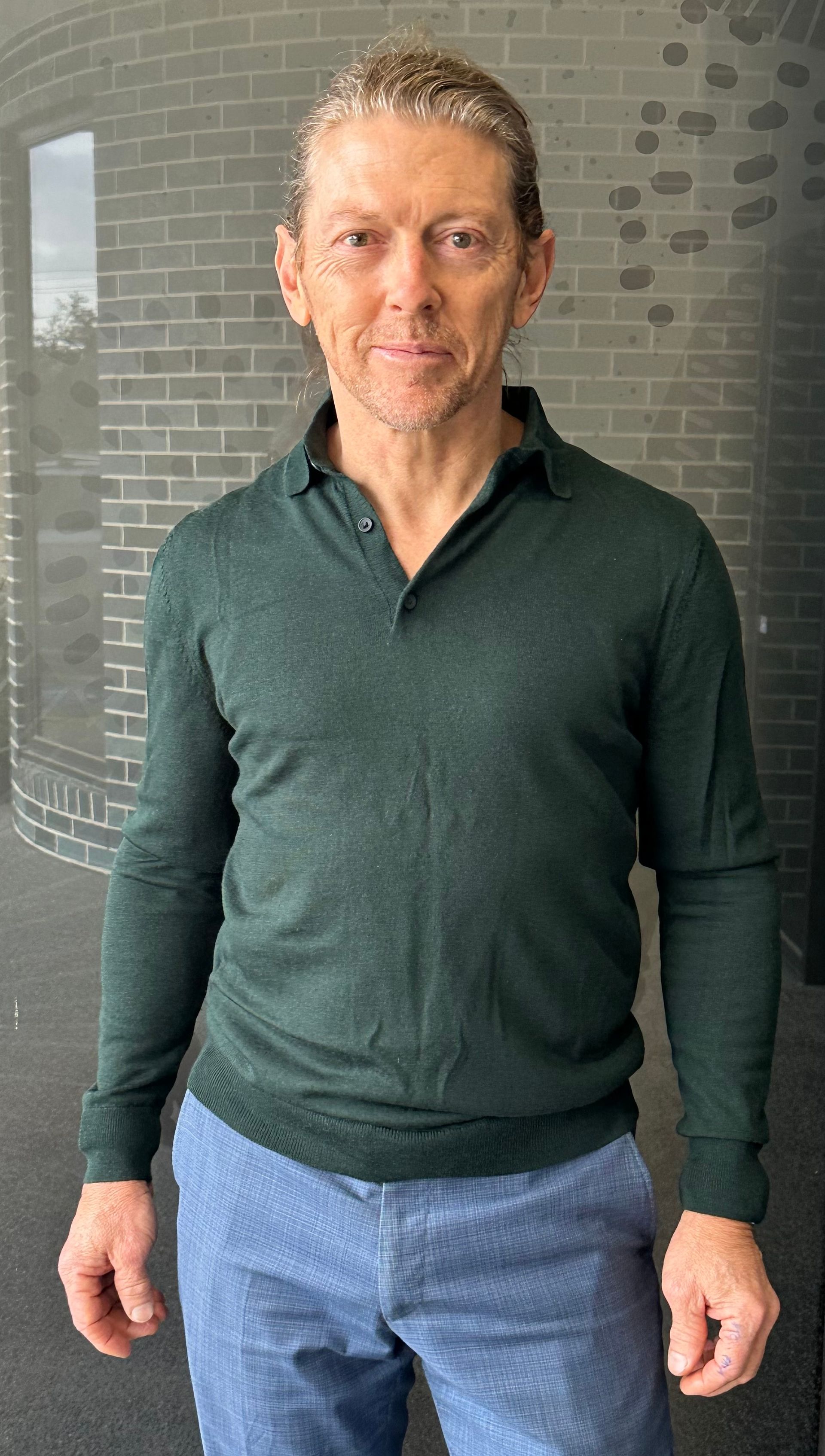
Why chose Dr Tony Briggs Neuro Chiropractor to help with Concussion
- 37+ years Clinical Experience
- Holistic Chiropractor
- Functional Neuro Rehabilitation Chiropractor (FNOR)
- Certified Lifestyle Medicine Professional
- Critical Care Nurse
- Member of the Australian Chiropractic Association
To improve concussion symptoms, I look at the neurological systems commonly affected after a concussion, including your brainstem, upper cervical spine, vestibular and visual systems. Changes in how these systems process information and work together can contribute to dizziness, headaches, balance problems, brain fog, visual difficulties and reduced tolerance to activity.
My Balance Reset Method™ focuses on improving how these key areas of your brain and nervous system communicate and work together. As function improves, you may experience better balance, clearer thinking, improved visual and movement tolerance and greater day to day function.
Your treatment is a personalised blend of Neuro Chiropractic, targeted neurological exercises, Medical Laser Therapy and lifestyle strategies, selected according to your assessment findings, symptoms and recovery goals.
No guessing. A real assessment. A clear plan.
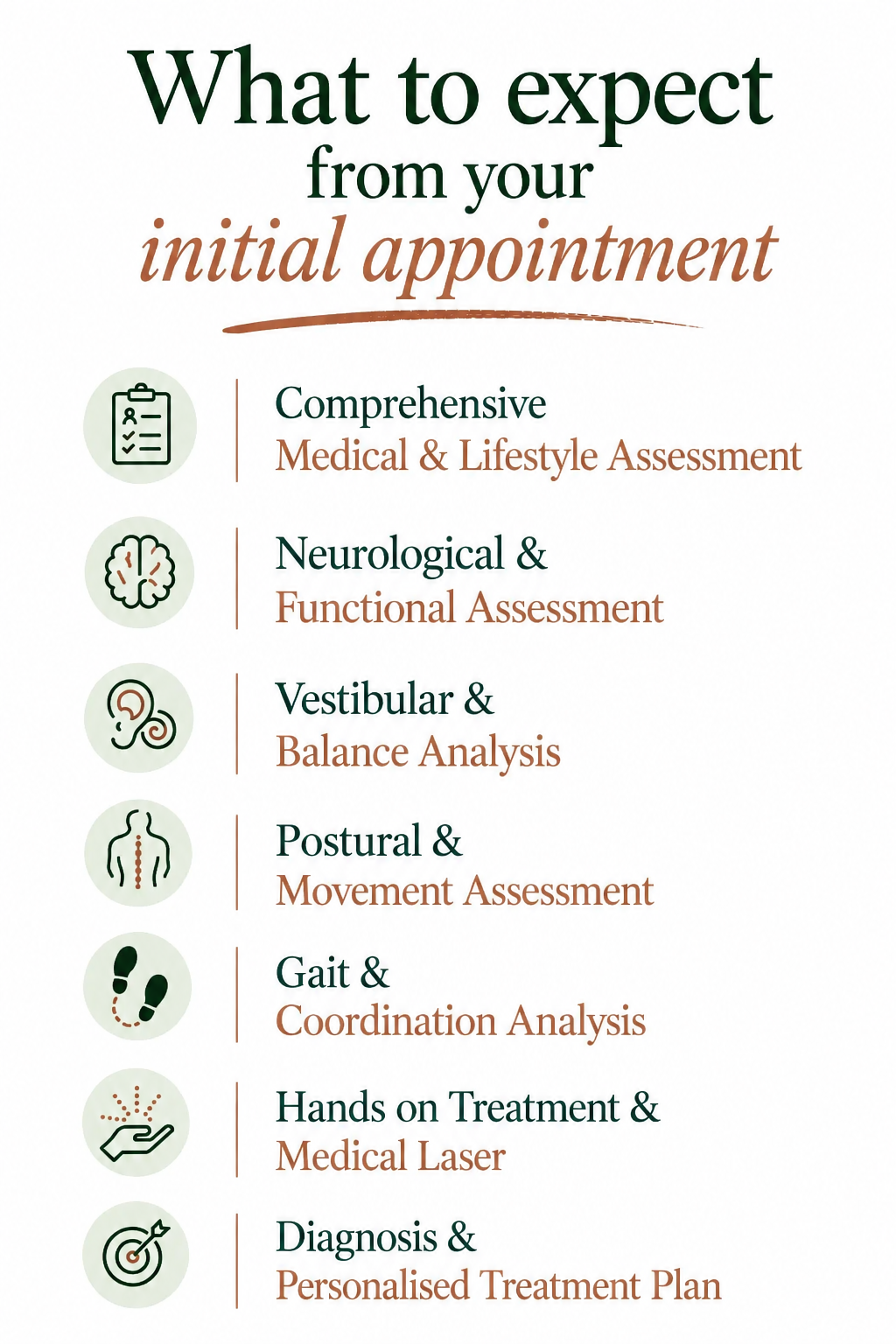
What to expect from your first Concussion Neuro Chiropractic Appointment
Your first appointment is 60 to 75 minutes, giving me the time to understand your symptoms, concussion history and how they are affecting your everyday life.
I complete a detailed neurological assessment looking at your balance, eye movements, coordination, visual processing, upper cervical function and response to movement and activity to identify which areas need the most support.
You’ll leave with a clear understanding of what I’ve found, what we’ll work on and your personalised treatment plan, including your next steps and what to expect from treatment.
I recommend allowing 6 to 8 sessions to start seeing meaningful results, giving your brain and nervous system the consistency they need to respond, adapt and change.
Clear, practical and realistic is how I work.
Heal faster & better with Medical LASER Therapy that supports tissue repair, reduces inflammation, & pain, & speeds up recovery.
No guessing. A real assessment. A clear plan.
Benefits using Neuro Chiropractic and my Balance Reset Method for Concussion
✓ Reduce headaches and head pressure
✓ Improve balance and coordination
✓ Reduce dizziness and motion sensitivity
✓ Improve visual focus and eye tracking
✓ Think more clearly with less brain fog
✓ Improve concentration and memory
✓ Better tolerate screens, light and busy environments
✓ Build tolerance for movement and physical activity
✓ Improve confidence with driving and everyday activities
✓ Return to work, study, exercise and sport
✓ Feel more confident in your recovery
✓ Feel more like yourself again
What causes a Concussion
- Sports collision or impact
- Motor vehicle accident
- A Fall
- Head impact
- Direct blow to the head
- Whiplash from sudden deceleration
- Workplace or industrial accident
- Physical assault
- Explosive blast
- Pressure wave
Concussion Symptoms
Immediate and Early symptoms
- Headache or pressure in the head
- Dizziness and balance problems
- Nausea and vomiting
- Sensitivity to light and noise
- Feeling slowed down or foggy
- Blurred or double vision
- Difficulty concentrating
- Memory problems
Persistent and post concussion symptoms
- Ongoing headaches that do not resolve
- Chronic brain fog and poor concentration
- Fatigue that does not respond to rest
- Sleep disruption and insomnia
- Anxiety, irritability and emotional dysregulation
- Dizziness and balance problems returning
- Visual problems and light sensitivity
- Difficulty returning to work or sport
Concussion Common Questions
Are you the right person to help with concussion?
Concussion and post concussion syndrome are among the core conditions I see. My functional neurology training gives me the tools to assess exactly where the concussion has disrupted normal brain function and treat it directly. If you are still not right weeks, months or years after a concussion, I want to hear what has been happening. Call me before you book if you are unsure.
My scans came back clear. Does that mean I am fine?
No. A concussion is a functional injury, not a structural one. Standard imaging rules out bleeding, fractures and major swelling. It does not assess how your brain is processing information, how your vestibular system is functioning, or how your neurological pathways are integrating. A clear scan with ongoing symptoms means the right assessment has not been done yet.
Is this chiropractic approach suitable if I feel easily overwhelmed or fatigued?
Yes. Care is carefully paced and adapted to individual tolerance. Sessions are designed to support regulation without pushing the system into overload or symptom flares.
It has been months since my concussion. Is it too late to get better?
No. Post concussion syndrome responds well to targeted neurological rehabilitation regardless of how long symptoms have been present. The brain retains the ability to form new neurological pathways at any stage. The key is identifying exactly what was disrupted and retraining it directly. That is what I assess for and treat.
Can I still have concussion symptoms years after an accident, fall, infection or an assult?
Yes. This is more common than most people realise. A significant head impact, a severe inner ear infection or a fall that jars the upper cervical spine can all disrupt vestibular and neurological function in ways that do not resolve on their own. If the disruption was never properly identified and rehabilitated, the brain adapts to the dysfunction and symptoms become the new normal. Years later those same symptoms — dizziness, brain fog, headaches, balance problems — are still present because the underlying neurological dysfunction was never treated. It is not too late to address it.
Do I need to stop exercising or weight training after a concussion?
Not necessarily. Complete rest is only recommended in the first 24 to 48 hours after injury. After that, carefully graded activity is actually an important part of recovery. The key is matching the type and intensity of exercise to what your nervous system can tolerate at each stage. Pushing too hard too soon can worsen symptoms and delay recovery. I guide this process throughout your care so your activity levels progress safely alongside your neurological rehabilitation.
How long does it take for a concussion to improve?
This varies significantly between people. Some experience full recovery within a few weeks. Others, particularly those with post concussion syndrome or a history of multiple concussions, require longer and more structured neurological rehabilitation. In my experience, a minimum of 6 sessions is needed to achieve meaningful and lasting change. I will give you an honest timeline at your first appointment based on your specific neurological findings.
Is a concussion a mild traumatic brain injury?
Yes. A concussion is classified as a mild traumatic brain injury. The word mild refers to the level of structural damage, not the severity of symptoms. Many people with a mild traumatic brain injury experience symptoms that are far from mild and that significantly disrupt their ability to work, exercise, concentrate and function in daily life. The mild classification can also create a false impression that the injury will resolve on its own with rest. For many people it does. But for a significant number it does not and without targeted neurological rehabilitation, the brain adapts to the dysfunction rather than recovering from it. That is when a mild traumatic brain injury becomes a long term problem.
Can I have concussion symptoms after a ear infection ?
Concussion symptoms following an inner ear infection often include persistent vertigo, dizziness, balance issues, tinnitus, and hearing loss, reflecting damage to the inner ear's vestibular system. These can be compounded by "brain fog" headaches, nausea, anxiety, and light/sound sensitivity. Specialized vestibular rehabilitation helps recovery
Can Neuro Rehab support brain fog or chronic fatigue after a concussion?
Yes. Brain fog and fatigue after concussion are neurological symptoms, not signs of laziness or deconditioning. They occur because the brain is working harder than normal to compensate for disrupted processing pathways. Targeted functional neurology rehabilitation reduces that neurological load by restoring accurate processing, which is why brain fog and fatigue often improve significantly as treatment progresses.
Do I need a formal concussion diagnosis to start care?
No. Many people who come to see me have never received a formal diagnosis despite having a clear history of head impact and ongoing symptoms. If your symptoms are consistent with concussion or post concussion syndrome, a neurological assessment is the right starting point regardless of whether a diagnosis has been made.
Can I claim back on private health?
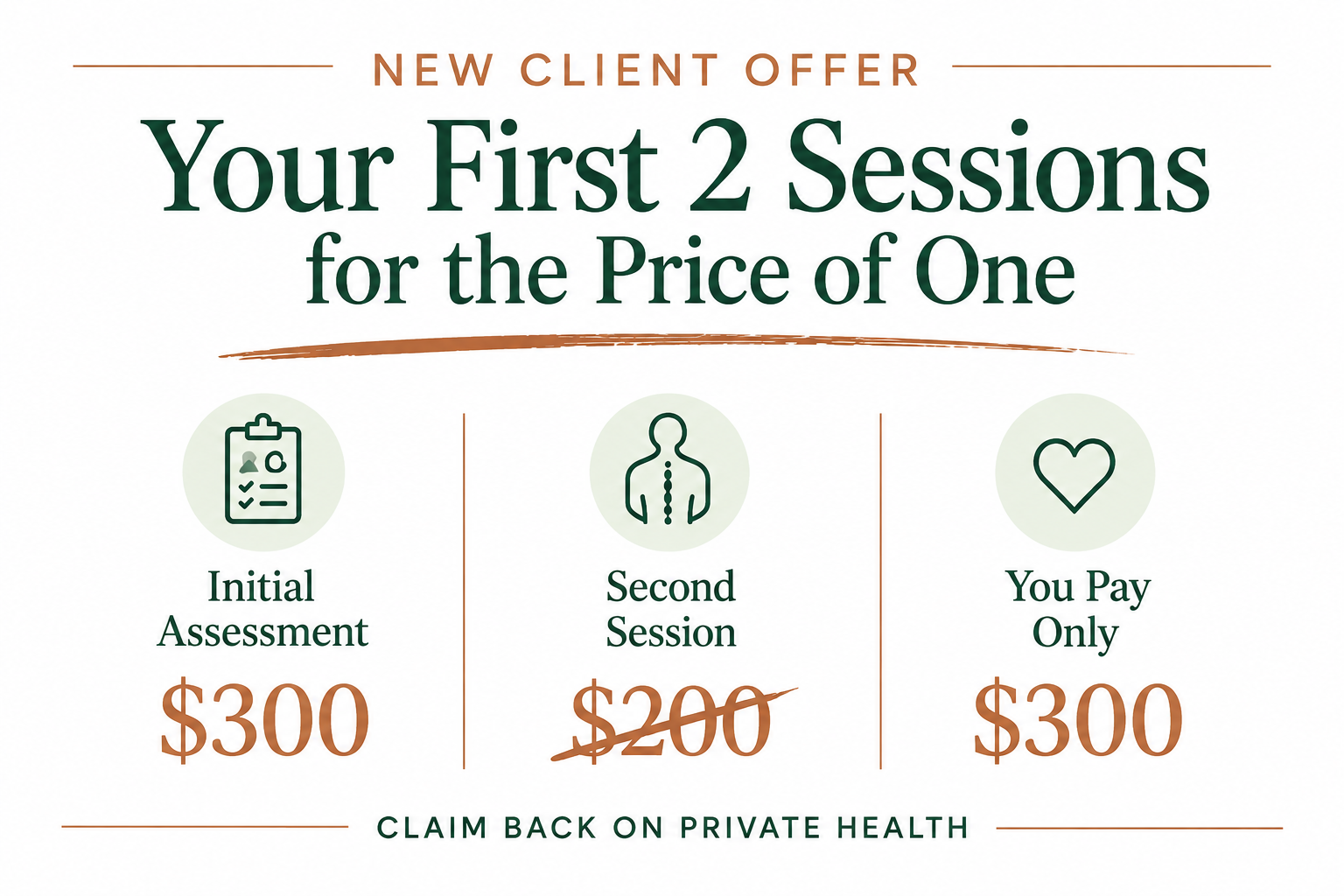
Yes, chiropractic care is covered by most extras policies including Medibank, BUPA, HCF, NIB and AHM. I process health fund claims on the spot. Rebate amounts vary by policy — worth checking with your fund before booking.
Concussion Neuro Rehab Chiropractic Clinic in Highett, Melbourne
Clinic Hours
Tuesday: 8 AM - 7 PM
Friday: 8 AM - 7 PM
Saturday: 9 AM - 1 PM
5 Beaumaris Parade, Highett, VIC, AUS
Free parking on site
Easy to reach from Brighton, Sandringham, Cheltenham, Mentone, Hampton and Moorabbin.